10/22/2026 – Життя Святих / Lives of the Saints
Св. Івана Павла ІІ, папи
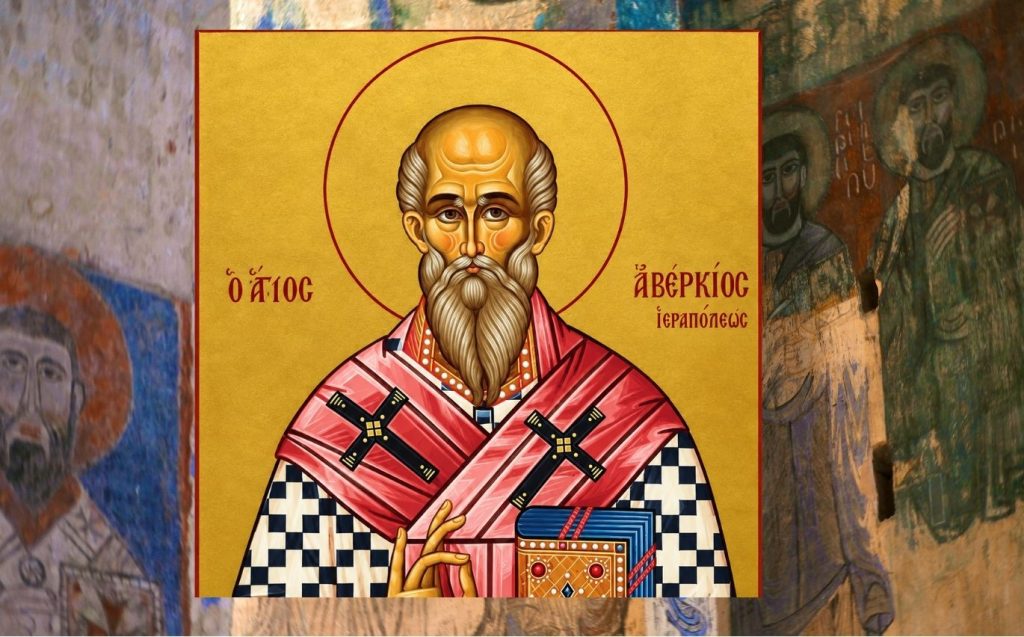
Св. рівноап. Аверкія, єп. Єрапольського, чудотв.
Свв. сімох отроків, що в Ефесі
Saint Averkios the Wonderworker
7 Holy Youths “Seven Sleepers” of Ephesus
The Synaxarion (Lives of the Saints):
Saint Averkios, Bishop of Hieropolis, lived in Phrygia during the second century. At that time, Hieropolis was mostly a pagan city, with only a few Christians. Saint Averkios prayed sincerely for the salvation of its people and asked the Lord to lead them to the knowledge of the truth.
One day, an Angel of the Lord appeared to him and commanded him to destroy the idols in the pagan temple. Saint Averkios obeyed without fear. The pagans became angry and wanted to kill him. The Saint went to the place where the people had gathered and openly exposed the weakness of their pagan gods.
At that moment, three young men who were possessed by evil spirits began to cry out. Saint Averkios prayed, and by the power of God he cast the demons out of them. When the people saw the young men completely healed, they understood that Saint Averkios was a man of God. They asked him to teach them the Christian Faith, and many of the people were baptized.
After this, Saint Averkios traveled through the surrounding cities and villages, preaching the Gospel. He visited Syria, Cilicia, Mesopotamia, and even Rome. Everywhere he went, he preached Christ, healed the sick, brought people to the Faith, and strengthened Christians in the truth. He also defended the Church against heresies and helped those who had wandered away from God return to the path of righteousness.
Because of his great apostolic work, Saint Averkios is called “Equal-to-the-Apostles.” After many years of service, he returned to Hieropolis, where he peacefully reposed in the Lord. Many miracles took place at his tomb. Saint Averkios himself wrote the inscription for his grave, which was carved on his tombstone and has survived to our own time.
The Synaxarion (Lives of the Saints):
On the same day, the Church also commemorates the Seven Holy Youths of Ephesus: Maximilian, Iamblicus, Martinian, John, Dionysius, Exacustodianus (Constantine), and Antoninus. They lived in Ephesus during the third century. The seven were friends from childhood and served together in the military.
When the emperor Decius came to Ephesus, he ordered all the citizens to offer sacrifices to the pagan gods. Those who refused faced torture and death. The seven young men refused to deny Christ. They openly confessed their faith and were stripped of their military rank and insignia.
When the emperor left for a military campaign, he allowed them to remain free, hoping that they would eventually change their minds. Instead, the young men left the city and hid in a cave on Mount Ochlon. There they prayed and prepared themselves for martyrdom.
The youngest of them, Saint Iamblicus, sometimes went into the city dressed as a beggar to buy bread. One day, he learned that the emperor had returned and was searching for them. The young men decided not to flee but to remain in the cave and entrust themselves to God.
Decius ordered the entrance of the cave to be sealed with stones so that the Saints would die from hunger and thirst. Two men who were secretly Christians placed a sealed container inside the cave before it was closed. It contained two metal tablets with the names of the seven youths and an account of their martyrdom.
But the Lord had another plan. He placed the seven young men into a miraculous sleep that lasted almost two hundred years.
During this time, the persecutions against Christians ended. In the reign of the holy Emperor Theodosius the Younger, some people began to deny the resurrection of the dead. They argued that after death the body could no longer rise because nothing would remain of it. Through the seven holy youths, the Lord revealed to the Church the mystery of the resurrection and the life to come.
One day, the owner of the land around Mount Ochlon decided to use the stones near the cave. His workers opened the sealed entrance and discovered the seven young men alive. They awoke without knowing that almost two hundred years had passed. Their bodies and clothing had remained completely undecayed.
The young men again sent Iamblicus into the city to buy bread. On his way, he saw a cross on the city gates and heard people openly speaking about Jesus Christ. He could not understand what had happened to his city.
When Iamblicus paid for the bread, he used ancient coins bearing the image of Emperor Decius. The people became suspicious and thought that he had discovered an old treasure. They brought him before the city governor, who was also the Bishop of Ephesus.
After hearing the young man’s strange story, the bishop understood that God was revealing a great mystery through him. Together with the people, he went to the cave. There they found the sealed container with the metal tablets, which recorded the names of the seven youths and the order of Emperor Decius to seal them inside.
When they entered the cave, they saw the seven Saints alive. The people rejoiced and understood that the Lord had performed this miracle to confirm the truth of the resurrection of the dead.
Soon the emperor himself came to Ephesus and spoke with the holy youths. Afterward, the seven young men bowed their heads to the ground and fell asleep again — this time until the General Resurrection.
Through them, the Lord revealed that death is not the end of human life. The Christian Faith proclaims that Christ has conquered death and that those who live in Him have the hope of resurrection and eternal life.