10/16/2026 – Життя Святих / Lives of the Saints
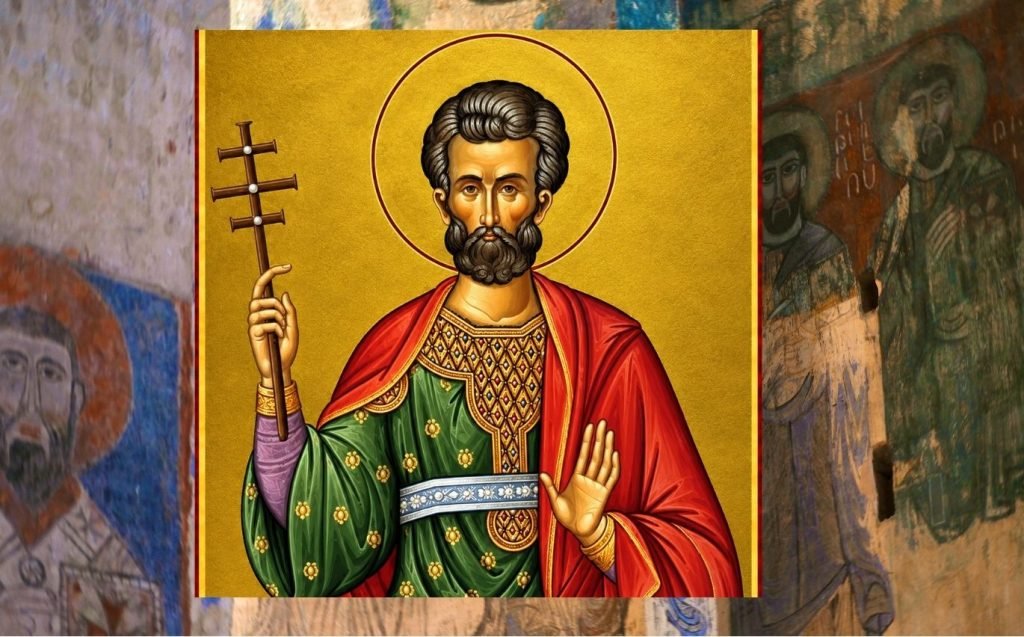
Св. мч. Лонгина, сотника
Martyr Longinus the Centurion, who stood at the Cross of the Lord
The Synaxarion (Lives of the Saints):
The Holy Martyr Longinus the Centurion was a Roman soldier who served in Judea under the authority of Pontius Pilate.
When Jesus Christ was crucified, Longinus was the centurion in charge of the soldiers who stood guard at Golgotha, at the foot of the Cross. He and his soldiers witnessed the final moments of the earthly life of Jesus.
They saw the darkness that covered the land, the earthquake, and the other signs that accompanied the death of the Savior.
What Longinus saw deeply touched his heart.
He looked upon the Crucified Christ and recognized something that many others refused to see. Before everyone who was present, he confessed: “Truly this was the Son of God.”
According to the tradition of the Church, Longinus was also the soldier who pierced the side of Jesus with a spear. When blood and water flowed from the wound, some of it touched his eyes and healed an illness from which he had suffered.
Longinus had come to the Cross as a soldier carrying out his orders. He left the Cross as a man who had encountered Christ.
After the Crucifixion and Burial of Jesus, Longinus and his soldiers were ordered to guard the tomb.
They were therefore witnesses not only to the death of Christ but also to the glory of His Resurrection.
When Christ rose from the dead, the soldiers saw what had happened. The Jewish leaders offered them money and instructed them to say that the disciples had come during the night and stolen the body of Jesus.
But Longinus and two of his companions refused the money.
They could not deny what they had seen.
Instead, they openly confessed the truth about the Resurrection.
After becoming believers, the soldiers were baptized by the Apostles. They then left military service and dedicated their lives to proclaiming the Gospel.
Longinus returned to his homeland of Cappadocia. His two companions went with him.
They preached about Jesus Christ, the Son of God, and their testimony was especially powerful because they had personally witnessed the Crucifixion and Resurrection.
Many people listened to them and accepted the Christian faith. Christianity began to spread throughout the city and surrounding villages.
When the Jewish leaders learned what was happening, they persuaded Pontius Pilate to send soldiers to Cappadocia to kill Longinus and his companions.
When the soldiers arrived at Longinus’s village, the former centurion himself came out to meet them.
He welcomed them into his home and invited them to share a meal.
The soldiers did not recognize him.
After the meal, they explained why they had come. They told him that they had been sent to find and kill Longinus.
Then Longinus and his companions revealed their identities.
The soldiers were shocked. They did not want to kill the man who had welcomed them into his home. They advised Longinus and the others to escape.
But the martyrs refused.
They had already given their lives to Christ, and they were prepared to remain faithful even unto death.
Longinus and his two companions were beheaded.
Their bodies were buried at the place where they were martyred. The head of Saint Longinus was taken to Pilate, who ordered that it be thrown onto a rubbish heap outside the city.
But God did not allow the story of His martyr to end there.
Some time later, a blind widow from Cappadocia came to Jerusalem with her son. She had come to pray at the holy places and to ask God for healing.
She had already sought help from many physicians, but nothing had restored her sight.
While they were in Jerusalem, her son became seriously ill and died.
The woman’s sorrow was overwhelming. Her son had been more than a child to her. He had also been her guide and had helped her because she was blind.
That night, Saint Longinus appeared to her in a dream.
He comforted her and told her that her son was alive with God in heavenly glory. He also told her that she would receive her sight.
Longinus instructed her to go outside the city walls, where she would find his head among a great pile of refuse.
The next day, people guided the blind woman to the place. She began searching through the rubbish with her own hands.
As soon as she touched the head of Saint Longinus, her sight was restored.
She could see again.
She glorified God and gave thanks for the intercession of the holy martyr.
She took the head of Longinus with her, brought it to the place where she was staying, and washed it with reverence.
That night, Saint Longinus appeared to her again.
This time he was accompanied by her son. They were surrounded by a bright heavenly light.
Longinus said to the woman: “Behold the son for whom you grieve. See the glory and honor that he now possesses, and be consoled. God has numbered him among those who live in His heavenly Kingdom.”
He then instructed her to take his head and her son’s body and bury them together in the same casket.
The woman followed his instructions.
She returned to Cappadocia and buried her son together with the head of Saint Longinus.
She had come to Jerusalem carrying deep sorrow. She returned home with faith, consolation, and joy.
Saint Longinus’s story is a beautiful example of a heart being transformed by an encounter with Christ.
He began as a soldier standing at the Cross because he had been ordered to be there. But when he saw Jesus, something changed within him.
He did not close his heart to what he witnessed.
Instead, he confessed the truth: “Truly this was the Son of God.”
He then remained faithful to that confession for the rest of his life.
Saint Longinus also teaches us that God can bring light out of the darkest moments.
The Cross appeared to be a place of death and defeat. But Longinus discovered there the truth about Christ.
The blind widow came to Jerusalem seeking healing for her eyes. God gave her that healing, but He also gave her something greater: healing of her heart and a new understanding of death.
She thought she had lost her son forever. But through the consolation of the saint, she came to understand that death is not the end for those who belong to Christ.
Her tears of sorrow became tears of gratitude and joy.
The life of Saint Longinus invites us to ask ourselves whether we are willing to recognize Christ when He stands before us.
Sometimes God speaks to us through unexpected moments, difficult circumstances, suffering, or the example of another person.
May we have the courage of Saint Longinus to recognize Christ, confess our faith, and remain faithful to Him.
May the Holy Martyr Longinus pray for us, that our eyes may be opened to see God’s presence in our lives, that our hearts may be healed from fear and despair, and that we may always remember that the Cross of Christ leads to the Resurrection.