11/01/2026 – Життя Святих / Lives of the Saints
Сщмч. Теодора Ромжі, єп. Мукачівського
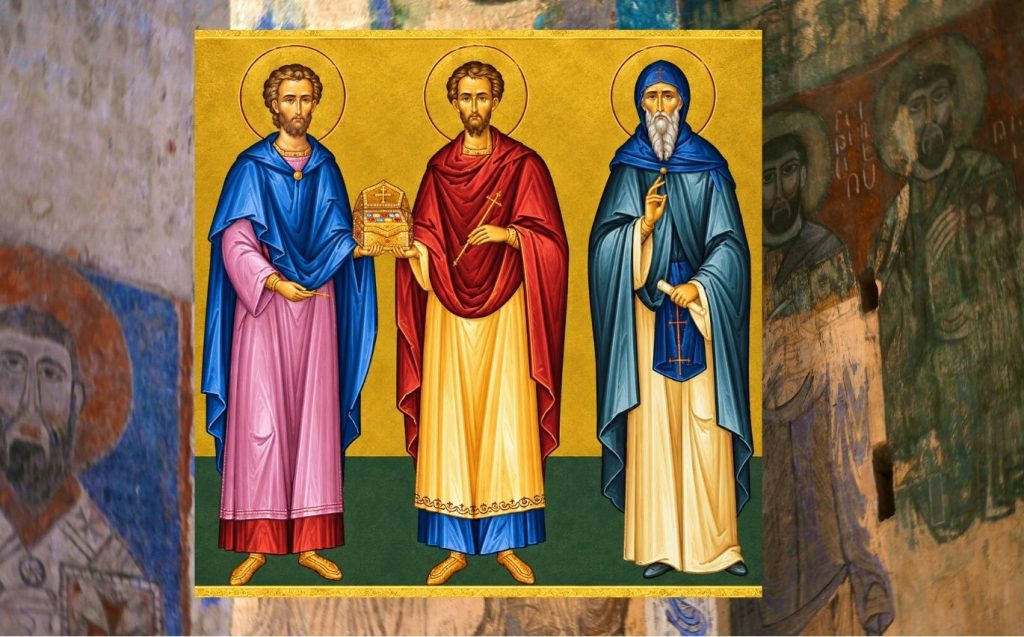
Свв. чудотв. і безср. Косми й Дам’яна
Blessed Theodore Romzha – Martyr
Holy Wonderworkers and Unmercenaries Cosmas and Damian of Mesopotamia
The Synaxarion (Lives of the Saints):
Blessed Hieromartyr Theodore Romzha (1911-1947)
Birth and Early Life: Born on April 14, 1911, in Velykyi Bychkiv, Austria-Hungary (now Ukraine), Theodore Romzha was raised in a devout Ruthenian Greek Catholic family. His early education was steeped in religious study, setting the foundation for his future vocation.
Education and Priesthood: Romzha attended the seminary in Uzhhorod before continuing his studies at the Pontifical Gregorian University in Rome. He was ordained a priest in 1936. Known for his piety, intelligence, and pastoral dedication, Romzha quickly gained respect among his peers and superiors. In the fall of 1939, Father Romzha was appointed Spiritual Director and Professor of Philosophy at the Eparchial Seminary in Uzhorod. One of his students later recalled: “He was strict and demanding as a Professor, but as a Spiritual Director he was fatherly and kind. He knew how to inspire us and to bring out the best in us. Staying in close contact with us, his students, he was able to transplant into our hearts the main features of his strong priestly character: his dedication, genuine piety and generosity of heart.”
Episcopal Appointment: At the young age of 33, Theodore Romzha was appointed Bishop of Mukachevo in 1944. His tenure coincided with the tumultuous period of World War II and the subsequent Soviet occupation of Transcarpathia, where the Greek Catholic Church faced increasing persecution.
Persecution and Martyrdom: Bishop Romzha became a staunch defender of his faith against the Soviet regime’s attempts to force the Greek Catholic Church into the Orthodox church which was more amenable to state control. His outspoken stance made him a target for Soviet authorities. In October 1947, after surviving an initial assassination attempt disguised as a traffic accident, Romzha was poisoned under KGB orders while recovering in a hospital. He died on November 1, 1947.
Legacy and Canonization: Bishop Theodore Romzha is remembered as a symbol of resistance against religious persecution. His martyrdom highlighted the brutal tactics of the Soviet regime against the Church and underscored his steadfast commitment to his faith. He was beatified by Pope John Paul II in 2001 as a martyr of the faith, recognizing his courage and ultimate sacrifice.
—–
The Holy Wonderworking and Unmercenary Physicians Cosmas and Damian, together with their mother, Saint Theodota, were natives of Asia Minor, although some accounts place their origins in Mesopotamia. Their pagan father died when they were still young, and Saint Theodota raised them in the Christian faith. Through her example and instruction in the Holy Scriptures, she taught her sons to live virtuously and faithfully serve God.
Both brothers became skilled physicians and received from the Holy Spirit the gift of healing illnesses of body and soul through prayer. They also cared for sick animals. Out of love for God and their neighbors, they never accepted payment for their services, following the words of our Lord Jesus Christ: “Freely you have received, freely give” (Matthew 10:8). Because they healed everyone without charge, they became known as the Unmercenary Physicians.
One day, the brothers were summoned to treat a woman named Palladia, who was gravely ill and had been abandoned by other physicians. Through their fervent prayers and faith, God restored her to health. Grateful for this miracle, Palladia secretly approached Damian and offered him three eggs as a small gift, saying, “Accept this gift in the Name of the Holy Life-Creating Trinity, the Father, the Son, and the Holy Spirit.” Out of reverence for the Holy Trinity, Damian accepted them.
When Cosmas learned of this, he was deeply troubled, believing that his brother had broken their vow never to accept payment. Before his death, he instructed that Damian should not be buried beside him. Soon afterward, Damian also reposed, and the faithful wondered whether the brothers should be buried together.
Then a miraculous event occurred. A camel that the saints had once healed spoke with a human voice, explaining that Damian had accepted the eggs not as payment, but out of reverence for the Name of God. Thus, the brothers were buried together at Thereman in Mesopotamia.
Many miracles occurred through the intercession of Saints Cosmas and Damian even after their repose. Near their church lived a man named Malchus, who once left home for a long journey, entrusting his wife to the protection of the holy brothers through prayer.
The devil, disguised as one of Malchus’s friends, came to the woman and persuaded her to follow him, intending to kill her in a remote place. When she realized the danger, she fervently called upon God for help. Suddenly, two powerful men appeared, and the devil fled, falling from a cliff. The men safely escorted her home.
When the woman asked her rescuers who they were, they replied, “We are the servants of Christ, Cosmas and Damian,” and immediately disappeared. Filled with gratitude, she shared her story and offered prayers of thanksgiving before their holy icon.
Since then, Saints Cosmas and Damian have been venerated as heavenly protectors of Christian marriage, guardians of marital faithfulness, and intercessors for peace, love, and harmony in family life.