09/30/2026 – Життя Святих / Lives of the Saints
Св. сщмч. Григорія, єп. Великої Вірменії
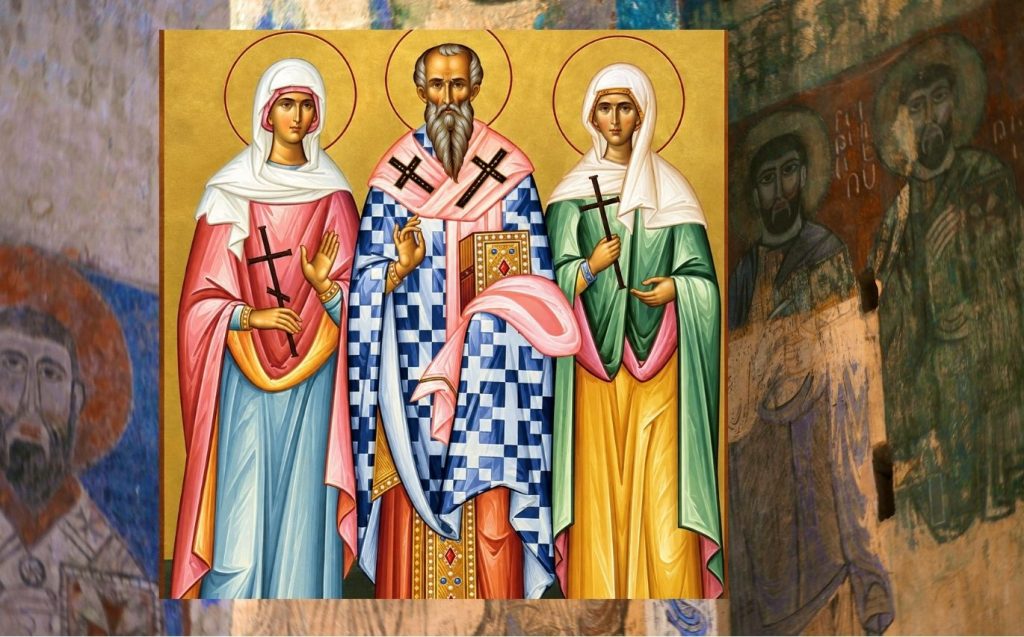
Hieromartyr Gregory, Bishop of Greater Armenia, Equal of the Apostles, Enlightener of Armenia
The Synaxarion (Lives of the Saints):
The Hieromartyr Gregory, Enlightener of Greater Armenia, was born in 257. He came from the royal family of the Parthian Arsakids. His father, Anak, was involved in the murder of the Armenian King Kursar. As punishment, Anak, his brother, their wives, and children were ordered to be killed. Gregory and his brother were infants at the time, but a relative rescued them and hid them. Gregory was eventually taken to the Roman Empire, while his brother was taken to Persia.
Gregory grew up in Caesarea in Cappadocia, where he became a Christian. He married and had two sons, but later became a widower. He raised his children in faith and piety. One son, Orthanes, became a priest, while the other, Arostanes, became a monk and lived in solitude.
Seeking to make amends for his father’s sin, Gregory entered the service of Tiridates, the son of the king whom his father had helped to murder. Gregory served him faithfully, and Tiridates considered him a friend. However, when Tiridates discovered that Gregory was a Christian, he became furious and demanded that Gregory worship his gods.
Tiridates later became King of Armenia after defeating a powerful enemy in single combat on behalf of the Roman Emperor. When he offered sacrifices to his pagan gods, he ordered Gregory to participate. Gregory refused. The King then subjected him to terrible tortures.
Gregory was hung upside down with a stone around his neck, beaten, mocked, exposed to foul smoke, and forced to walk in iron sandals covered with nails. Through all these sufferings, he continued to praise God and sing the Psalms. The Lord healed his wounds, and Gregory remained steadfast.
The King ordered further tortures. Gregory was burned with hot tin and finally thrown into a deep pit filled with snakes, scorpions, and other poisonous creatures. Yet God protected him, and he remained unharmed. For fourteen years, faithful women secretly kept him alive by lowering bread into the pit. An angel also appeared to him, strengthening and encouraging him.
During this time, King Tiridates ordered the killing of the holy virgin Saint Ripsimia, the Eldress Gaianḗ, and many other Virgin Martyrs who had fled to Armenia. After their death, the King and those responsible for the killings were struck by God’s judgment. Their minds were disturbed, and they wandered like wild animals.
Gregory was finally brought out of the pit. He was washed, clothed, and fed, and then brought before the King. The people begged Gregory to pray for Tiridates and the others. Before doing so, Gregory asked about the bodies of the martyred virgins, which had remained unburied for nine days. He buried their relics and began preaching to the people, calling them to turn away from idolatry and believe in Christ.
Many people accepted the Christian faith and built a great church. Gregory placed the relics of the martyrs within it. He then brought Tiridates before the relics of those whom he had killed and prayed for him. The King repented, and God restored his appearance.
Through Saint Gregory’s preaching and ministry, the whole of Armenia was gradually converted to Christ. Pagan temples were destroyed, churches were built, and Christian worship was established. Saint Gregory ordained priests, founded schools and monasteries, and organized the Church throughout the country.
After many years of faithful service, Saint Gregory withdrew into the wilderness, where he peacefully ended his earthly life in a manner pleasing to God. His son Aristanes became a bishop in Cappadocia and later took part in the First Ecumenical Council of Nicaea as one of the 318 Holy Fathers.
Saint Gregory is remembered as the great missionary and enlightener of Armenia, a faithful servant of Christ who endured many sufferings without abandoning his faith.