09/17/206 – Життя Святих / Lives of the Saints
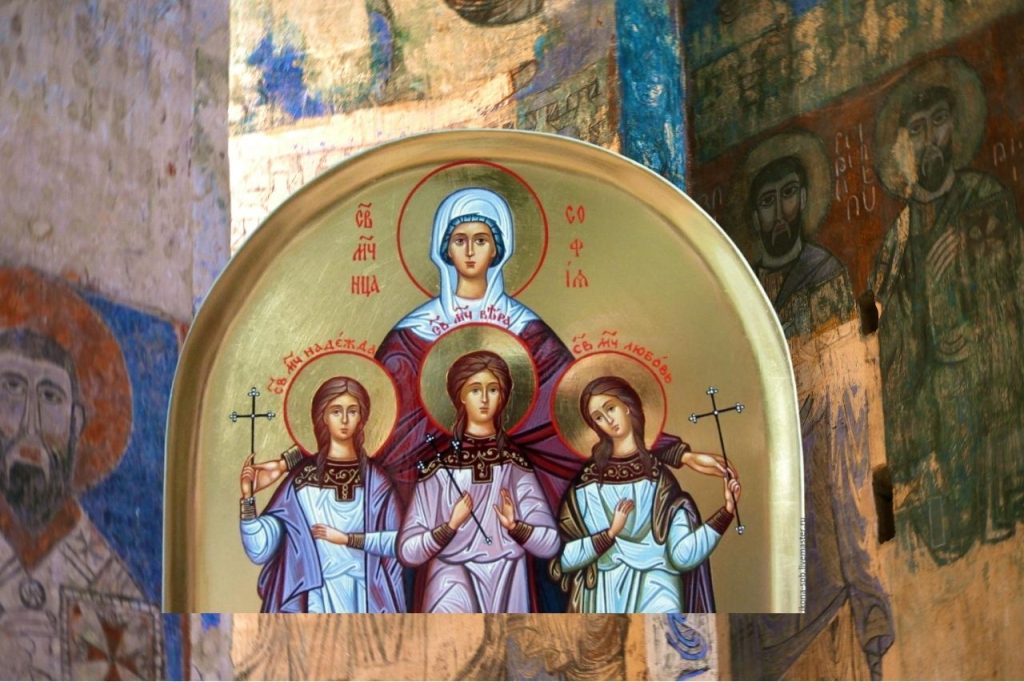
Св. мц. Софії і трьох її дочок: Віри, Надії й Любові / Martyr Sophia and her three daughters at Rome
The Synaxarion (Lives of the Saints):
The Holy Martyrs Sophia and her daughters, Faith, Hope, and Love, were born in Italy. Their mother was a pious Christian widow who named them after the three Christian virtues. Faith was twelve, Hope was ten, and Love was nine. Saint Sophia raised them in the love of Jesus Christ, and they openly confessed their faith.
An official named Antiochus reported them to Emperor Hadrian, who ordered them to be brought to Rome. Knowing that they would face torture, the mother and her daughters prayed for strength and courage. When they appeared before the emperor, everyone was amazed by their peace and courage.
Hadrian ordered each girl to offer sacrifice to the goddess Artemis, but none of them would deny Christ. They were subjected to terrible tortures: they were burned on an iron grating, placed in a red-hot oven, and thrown into boiling tar. Yet the Lord preserved them.
The youngest, Love, was tied to a wheel and beaten with rods. Despite their terrible suffering, all three girls remained faithful to Christ and joyfully accepted martyrdom. They were finally beheaded, bravely giving their lives for their Heavenly Bridegroom.
The emperor then forced Saint Sophia to watch the suffering of her daughters. She encouraged them to remain faithful to Christ and endured the terrible pain of seeing them die. Afterward, she was allowed to take their bodies. She buried them on a hill outside the city and remained beside their graves for three days, praying.
Saint Sophia then peacefully gave her soul to the Lord. Although she did not suffer physical torture, she received a martyr’s crown because she suffered deeply in her heart for Christ and for her children.
Believers buried Saint Sophia beside her daughters. The relics of the holy martyrs have been venerated in El’zasa, in the church of Esho, since the year 777.