11/13/2026 – Життя Святих / Lives of the Saints
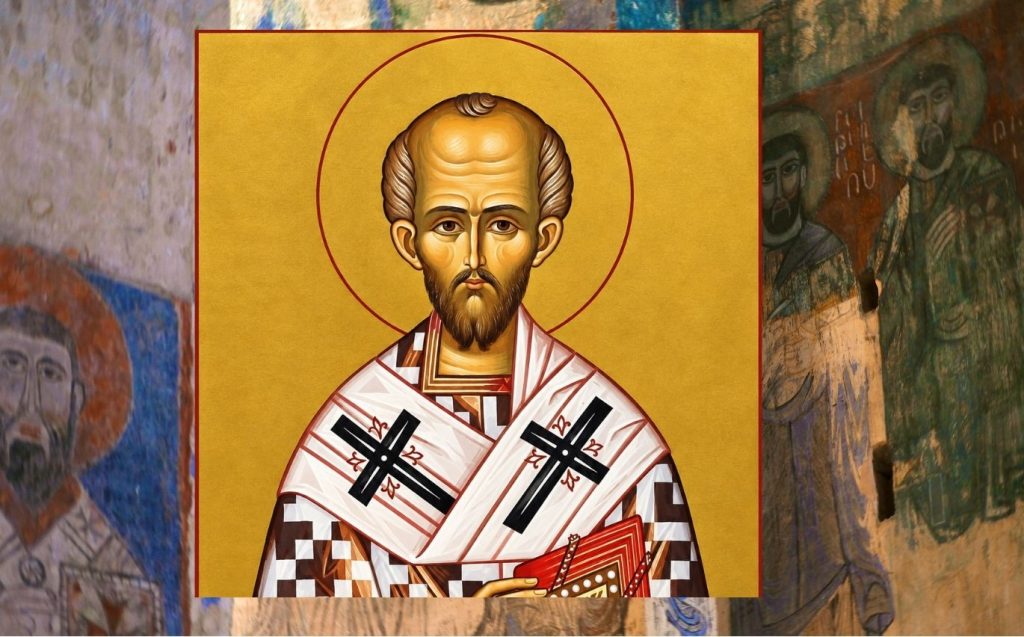
Св. Івана Золотоустого, архиєп. Царгородського
Saint John Chrysostom, Archbishop of Constantinople
The Synaxarion (Lives of the Saints):
Saint John Chrysostom, Archbishop of Constantinople and one of the Three Holy Hierarchs (January 30), was born in Antioch around 347 into a Christian family. His father, a military commander named Secundus, died when John was still young. His mother, Anthusa, devoted herself entirely to raising her son in the Christian faith.
In 381, Bishop Meletius ordained him a deacon, and in 386 Bishop Flavian ordained him a priest. John soon became renowned for his extraordinary preaching. His ability to explain Scripture and speak directly to people’s hearts earned him the name Chrysostom, meaning “Golden-Mouthed.”
For twelve years, he preached regularly in Antioch, often twice a week and sometimes daily. His sermons covered nearly every book of the Bible, including Genesis, the Psalms, the Gospels, and the letters of Saint Paul. He explained Scripture with remarkable depth and practical wisdom, helping Christians understand how God’s Word should shape their daily lives.
His preaching was accompanied by active care for those in need. Under his guidance, the Church in Antioch provided daily assistance to approximately 3,000 widows and virgins, as well as the sick, the poor, and travelers. He firmly believed that Christian faith must be expressed through compassion and service.
In 397, following the death of Archbishop Nectarius, John was chosen to become Archbishop of Constantinople. There he focused on renewing the spiritual life of the clergy, strengthening the Church, and helping the poor. He directed much of the Church’s resources toward hospitals and shelters for pilgrims, while maintaining a simple and disciplined personal life.
His missionary concern extended far beyond the capital. He supported the spread of Christianity among the Goths, Slavs, and other peoples, sending missionaries to distant regions and working to bring separated Christian communities back into the Church. He also contributed to the development of liturgical worship, including the practice of antiphonal singing during the services.
Saint John was fearless in defending the Gospel and speaking against corruption, injustice, and immoral behavior, even when it involved powerful people at the imperial court. His criticism of the empress Eudoxia and his defense of a persecuted widow brought him into conflict with the imperial authorities.
His opponents organized a council that condemned him and ordered his removal from office. In 404, he was sent into exile. Despite public protests and the suffering of his supporters, John accepted the decision peacefully to prevent violence. Even in exile, he continued to encourage Christians through numerous letters, 245 of which have survived.
His enemies eventually ordered him transferred to a remote place near the Black Sea. Already weakened by illness, John was forced to undertake a difficult journey lasting three months under military escort. He never reached his destination. Near Comana, at the shrine of Saint Basiliscus, he received Holy Communion and peacefully departed to the Lord on September 14, 407. His final words were: “Glory to God for all things!”
In 438, his holy relics were solemnly transferred to Constantinople. His writings, especially his biblical commentaries, sermons, and teachings on the priesthood, continue to guide the Church.
Saint John Chrysostom is remembered as one of the greatest preachers and teachers of the Christian faith. His life reminds us that the Gospel must be proclaimed with courage, lived with humility, and expressed through care for those who suffer.
His principal feast is celebrated on January 30, together with Saints Basil the Great and Gregory the Theologian. The Church also commemorates him on January 27 and November 13.