
10/19/2026 – Життя Святих / Lives of the Saints
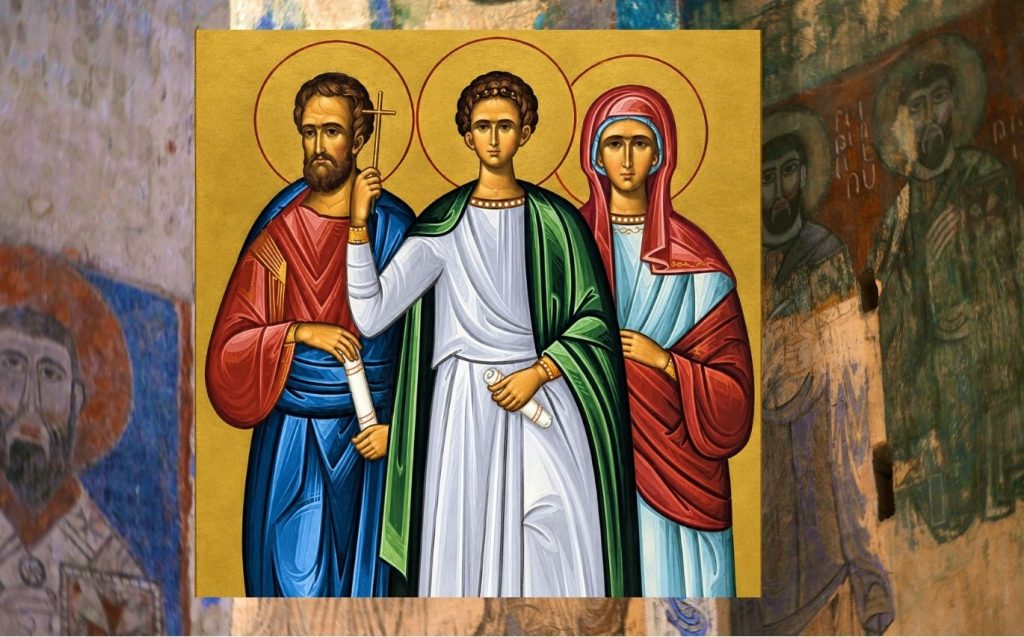
Св. прор. Йоїла
Св. мч. Уара
Prophet Joel
Martyr Varus, and seven Monastic Martyrs with him
The Synaxarion (Lives of the Saints):
The Holy Prophet Joel and the Martyr Varus
The Holy Prophet Joel lived many centuries before the coming of Christ, around the eighth century before Christ. He was one of the prophets of the Old Testament who called the people of God to repentance and warned them about the consequences of turning away from the Lord.
The Prophet Joel spoke about a time of great suffering and destruction. He foretold the desolation of Jerusalem and called the people to recognize that their troubles were connected with their spiritual unfaithfulness. Yet, even in the midst of his warnings, Joel proclaimed a message of hope. His prophecy does not end with destruction. It points toward God’s mercy and the renewal that He would bring to His people.
One of the most important prophecies of Joel concerns the coming of the Holy Spirit. Through the inspiration of God, he proclaimed:
“I will pour out my Spirit on all flesh.”
Joel foretold that God’s Spirit would no longer be associated only with a particular group of people or a particular time. The gift of the Spirit would be poured out upon all who would receive God’s salvation.
This prophecy was fulfilled in a remarkable way at Pentecost, when the Holy Spirit descended upon the Apostles. The frightened disciples were transformed into courageous witnesses of Christ, and they began to proclaim the Gospel to people from many nations.
The prophecy of Joel therefore points toward the universal mission of the Church. The Gospel is not meant for only one nation or one group of people. Through Jesus Christ, salvation is offered to the whole human family, and the Holy Spirit is given to guide and strengthen God’s people.
The prophet Joel also spoke about signs in the heavens and on the earth: blood, fire, and columns of smoke. Christian hymnography has understood these images in the light of the mystery of Christ.
The hymnographer Anatolius connects Joel’s prophecy with the Nativity of the Lord. In the Praises of Matins on the Sunday following the Nativity, he interprets the blood as pointing to the Incarnation of the Son of God, the fire as revealing His divine nature, and the pillars of smoke as a sign of the Holy Spirit.
In this way, the words of an Old Testament prophet become a doorway into the mystery of Christ. The prophecies of the Old Testament prepare us to recognize the Savior. What was spoken centuries before is fulfilled in the coming of Jesus Christ and the outpouring of the Holy Spirit.
The life and prophecy of Joel remind us that God’s warnings are always connected with His mercy. When God calls us to repentance, He does not desire our destruction. He desires to restore us, to renew our hearts, and to lead us back into communion with Him.
The Holy Martyr Varus lived in Egypt during a time when Christians suffered severe persecution. He lived during the late third and early fourth centuries, when the Roman Empire repeatedly attempted to suppress the Christian faith.
Varus was a military commander and secretly followed Christ. Although he held a position of authority, he did not use his power for his own comfort or advantage. Instead, he used it to help those who were suffering.
Many Christians had been arrested and thrown into prison because of their faith. Varus secretly visited them at night. He brought them food, cared for their wounds, encouraged them, and strengthened them in their suffering.
He knew that helping imprisoned Christians could put his own life in danger. Yet he did not turn away from them. His faith was not simply something he kept privately in his heart. His faith became an act of love and service.
One night, Varus spent the entire night speaking with seven imprisoned monks. These men were Christian teachers who had been arrested because of their faith. They had been beaten, deprived of food, and weakened by their suffering.
Varus listened to them and encouraged them. Perhaps he expected to strengthen them, but in their suffering they also strengthened him. Their courage became a witness to him, and their faith helped him prepare for his own final confession of Christ.
The next day, the seven monks were taken away to be executed. Varus followed them as they were led to the place of martyrdom. He did not abandon them in their final moments.
The judge noticed Varus’ strong faith and realized that he himself was a Christian. The judge ordered that Varus be severely beaten.
Varus endured the suffering without denying Christ. His final witness was not given through many words, but through his steadfastness. He remained faithful to the Lord even when faith demanded the ultimate sacrifice.
During the beating, Saint Varus died and received the crown of martyrdom. After his death, the seven monks were also beheaded for their confession of Christ.
The lives of the Prophet Joel and the Martyr Varus are very different, but they reveal one truth: God calls His people to remain faithful even in difficult times.
Joel proclaimed God’s Word when his people needed to repent and return to Him. Varus lived that faith through courageous love, serving Christians who were suffering and ultimately giving his own life for Christ.
Both remind us that faith is not only about what we say. It is also about how we live when following God becomes difficult.
The Holy Prophet Joel teaches us to listen when God calls us to repentance and to trust in His promise to pour out His Spirit upon His people. The Holy Martyr Varus teaches us to see Christ in those who suffer and to serve them with courage and love.
May their prayers help us to remain faithful to God, to care for those who are suffering, and to open our hearts to the Holy Spirit. May the Lord renew our hearts, strengthen our faith, and make our lives a witness to His love.